How Cleveland Clinic Supports Preceptors and Strengthens Clinical Education content
How Cleveland Clinic Supports Preceptors and Strengthens Clinical Education
When preceptors have questions, feel overwhelmed, or struggle to fit a student into their schedule, who can they turn to? Cleveland Clinic has built a network of colleagues and school partners to help them work through those challenges and feel supported in their teaching role.
Jennifer Docherty and Leighanne Hustak are co-chairs of Cleveland Clinic’s Preceptor Council, which connects clinical placement staff with preceptors to improve the precepting experience. Docherty serves as Program Coordinator IV in the Office of Advanced Practice, and Hustak is Manager APRN & PA at the Primary Care Institute. Alongside council members and school partners, they’ve worked to simplify placements, offer teaching guidance, and recognize preceptors’ contributions.
Letting Preceptors Guide Support
Cleveland Clinic’s Preceptor Council gives preceptors a voice in deciding what support would be most useful to them. When developing the APRN/PA Preceptor Development Forum, an educational event focused on clinical teaching, the team asked preceptors which challenges they wanted help with and how they preferred to learn.
Their answers shaped both the topics and the format. Sessions addressed setting expectations, giving feedback, developing clinical reasoning, and balancing teaching with patient care. Requests for interactive and on-demand learning also guided the event’s delivery and plans to make the sessions available afterward.
“The preceptors are just happy to have a voice,” Jennifer said.
Standardizing the Placement Process
For some Cleveland Clinic preceptors, the challenge started before a student ever arrived. Calls and emails from students looking for placements left individual clinicians fielding more requests than they could manage.
“We actually had several preceptors, really great preceptors, that won’t take students anymore because they were so overwhelmed by the number of requests that they were getting,” Jennifer said.
A standardized application process through ACEMAPP has helped ease that burden. Advanced Practice Nursing and Physician Assistant students now submit applications to the Office of Advanced Practice instead of contacting providers directly. The placement team reviews applications with clinical specialty leads, who know their teams and help identify available preceptors.
This gives everyone a consistent process to follow. Students’ backgrounds and learning needs guide placement decisions, and preceptors receive information about upcoming rotations so they can prepare and flag scheduling changes.
Building Strong School Partnerships
Building relationships with school clinical coordinators has been equally important. Those connections give the team someone to contact about program requirements, application questions, and placement options.
“I think a huge piece of the puzzle was forming an alliance, a friendship, or a communication bridge with the schools that was not there before,” Jennifer said.
Those partnerships have also made placements more flexible. Cleveland Clinic worked with schools to allow both Advanced Practice Nursing and Physician Assistant preceptors to teach students from either profession. Some teams also share a student’s rotation among several preceptors, spreading out the teaching workload while giving students different perspectives on patient care.
Providing Ongoing Preceptor Support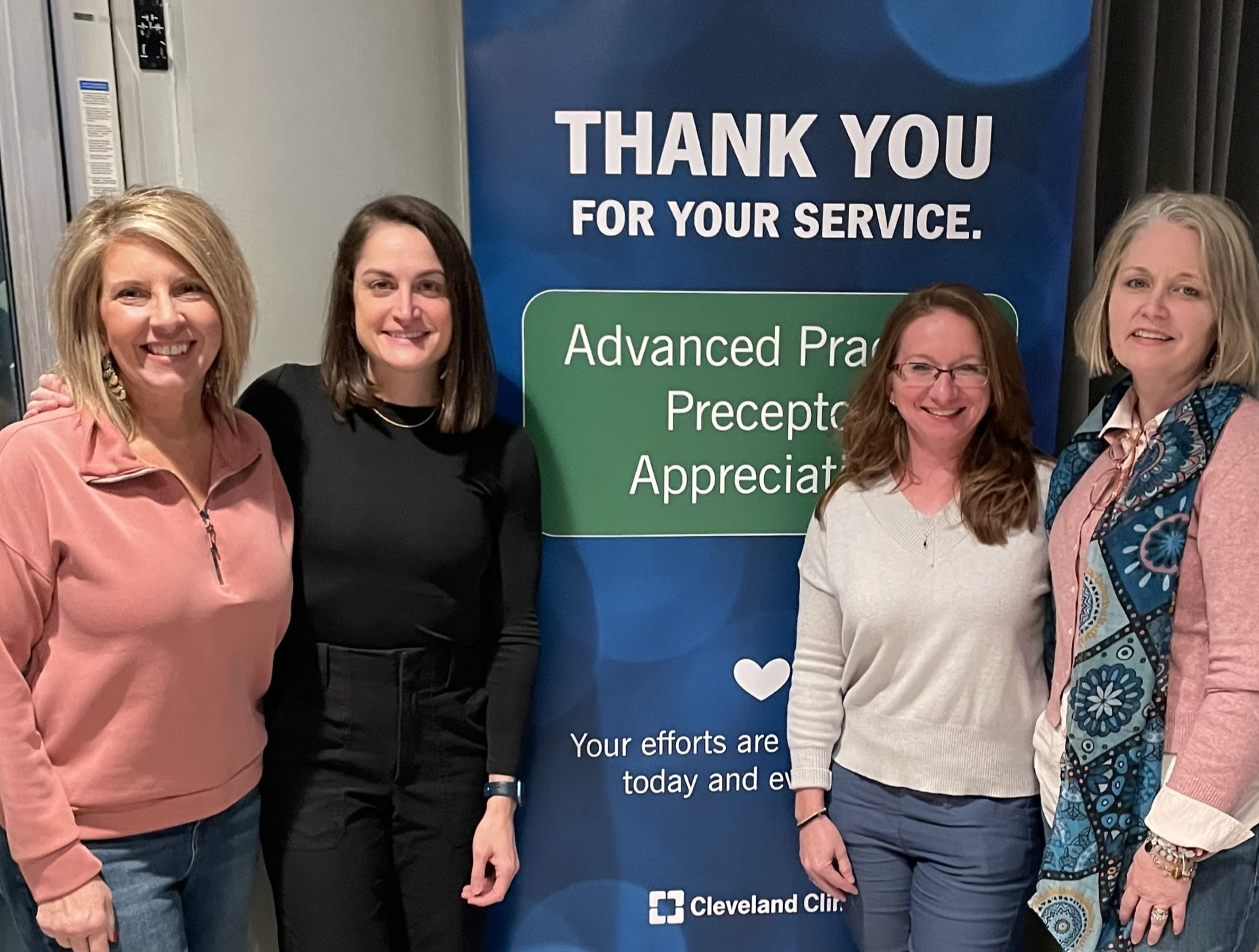
For Cleveland Clinic, supporting preceptors means helping them find a way to teach that works for them. That might involve sharing a rotation with colleagues or talking through questions with an experienced preceptor. Appreciation events, gifts, and scholarship opportunities also recognize their time and effort, while professional development support helps them continue their own education.
“I feel like anybody could be a preceptor that wants to be because we can figure it out,” Leighanne said.
Together, these efforts help preceptors feel prepared, supported, and valued as they help students prepare for clinical practice.